
Explore the Spiritual Practice of Yoga (No need to be flexible!)
When most people hear the word yoga, they immediately think of stretching on a mat. And if I tell someone I'm a yoga teacher, one of the most common responses is, "Oh, I could never do yoga, I'm not flexible."
Yet, yoga has very little to do with flexibility.
To understand yoga as a spiritual practice, we look to the 8 Limbs of Yoga, given to us by Patanjali in the Yoga Sutras.
The 8 Limbs of Yoga
The first 4 limbs relate to the external or visible parts of the practice and are achieved through our effort and practice. The last 4 limbs come as a result of our practice and can be regarded as the internal limbs that take the yoga practitioner to a deeper understanding of the self and the unified field of consciousness.
1. YAMAS
Social ethics. Moral principles and ethical codes for interacting with others. Often understood as “restraints.”
Yama refers to vows, disciplines, or practices that guide how we relate to the world around us and how we engage with others. Living in alignment with these principles helps reduce inner and outer conflict, creating more clarity, ease and harmony within ourselves and in our relationships. In this way, the yamas support a steadier mind and a more peaceful inner state, laying the foundation towards deeper states of yoga like samadhi.
There are five yamas:
Ahimsa (non-violence): practicing kindness and compassion in thought, word, and action toward ourselves and all beings
Satya (truthfulness): being honest while communicating with care and integrity
Asteya (non-stealing): not taking what is not freely given, including time, energy, or ideas. practicing respect for boundaries and cultivating a sense of enoughness.
Brahmacharya (right use of energy / moderation): directing our energy with awareness, avoiding excess and honoring balance. Being awake to the sense but not led by them.
Aparigraha (non-greed / non-hoarding / non-grasping): letting go of attachment and cultivating a sense of enoughness. Allowing things to come and go.
2. NIYAMAS
Internal observances of daily conduct. Personal ethics. Often understood as practices to cultivate.
Niyama refers to the disciplines that guide our inner world- how we care for ourselves, relate to our habits and create a supportive internal environment for growth. These practices help cultivate clarity, steadiness and self-awareness, supporting a deeper connection to the path of yoga and the unfolding toward samadhi.
There are five niyamas:
Saucha (cleanliness / purity): maintaining clarity and cleanliness in body, mind, environment and practices
Santosha (contentment): cultivating acceptance and a sense of enoughness in the present moment
Tapas (discipline / inner heat): committing to practices that build resilience, focus and transformation
Svadhyaya (self-study): reflecting on the self and studying teachings that deepen understanding
Isvara Pranidhana (surrender to a higher power): letting go of control and cultivating trust in something greater than oneself
3. ASANA
Yogic postures (what we do on the mat). This is often what people think of as “yoga,” but the mat work is only one part of the broader, holistic practice.
Asana helps cultivate strength, flexibility and awareness in both body and mind. Traditionally, asana is understood as a steady and comfortable seat (sthira sukham asanam), preparing the body to sit with ease over time. Through this, the body becomes less of a distraction and the mind more settled and receptive.
4. PRANAYAMA
Flow of Life Force Energy. Often translated as “breath control,” pranayama refers to the conscious regulation and cultivation of energy through the breath. Prāṇāyāma is traditionally understood as prāṇa + āyāma: prāṇa = life force, vital energy (often linked to breath) + āyāma = expansion, extension, regulation or lengthening. In this sense, pranayama is not simply about controlling the breath, but about expanding and refining the flow of prāṇa within the body.
Through pranayama, we learn to regulate the nervous system, release physical and emotional tension and cultivate a more steady, present state of awareness. This creates the conditions for greater balance in body and mind and supports the deeper limbs of yoga.
5. PRATYAHARA
Withdrawal of the senses. Pratyahara refers to the turning inward of the senses, gently drawing awareness away from external stimuli and toward the inner landscape. Rather than suppressing the senses, we begin to observe and disengage from their pull, creating space between perception and reaction. Through this practice, we cultivate clearer boundaries between the outer world and our inner experience, allowing the mind to settle. This inward orientation becomes a bridge between the external practices of yoga and the more internal limbs, supporting states of deep rest, awareness and meditative presence.
6. DHARANA
Concentration. Dharana refers to the cultivation of focused, one-pointed attention. It is the precursor to dhyana (meditation) and samadhi (absorption). In the practice of dharana, we train the mind to rest on a single point of focus, uninterrupted by internal or external distractions. This point of focus may be the breath, an object, a yantra, a mantra, kirtan, or trataka. Through this sustained attention, the mind becomes steadier and less fragmented. In a modern context, dharana can also be understood as the practice of presence- bringing full awareness to whatever you are doing and gently returning the mind each time it wanders.
7. DHYANA
Meditation. Dhyana refers to the state of meditation- an uninterrupted flow of awareness. Where dharana is the effort of focusing the mind on a single point, dhyana arises when that focus becomes steady and continuous. In this state, awareness flows with ease. There is less sense of effort or control and the distinction between observer and object begins to soften. Rather than “doing” meditation, there is a sense of simply being- present, aware and at rest.
As concentration deepens, dharana naturally evolves into dhyana, where the mind is no longer repeatedly brought back to the point of focus, but remains there in a steady, continuous stream of attention.
8. SAMADHI
Blissful union with the Divine. Connection. Oneness. Samadhi means to become one and is often interpreted as enlightenment. It is the final limb of the eightfold path of yoga. In samadhi, we realize there is no separation- the mind and intellect quiet, and there is only pure awareness, truth and joy. Through recognizing that spirit exists in all moments, the “good” and the “bad”, we begin to understand this unity.
Explore the 8 Limbs of Yoga in 200-Hour Yoga Teacher Training
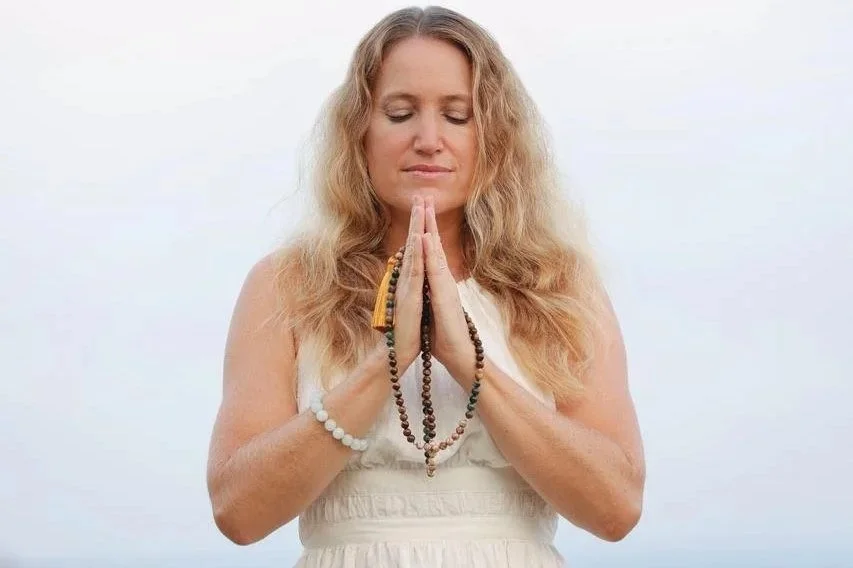
The 8 Limbs remind us that yoga isn't something we only practice during class. Yoga is how we treat others and ourselves. It's calming down with a deep breath.
The poses may be what first bring us to yoga, but they ultimately prepare us and lead us to the deeper wisdom of the teachings.
Yoga teacher training isn’t just for those who want to become teachers, it’s a way to deepen your yoga through philosophy, breath, concentration, mantra, meditation and community.
More ways to deepen your Yoga practice
MEDITATE
Cultivating a daily meditation practice is a great way to advance your yoga practice. If you’re new to meditation, check out my 100’s of guided meditation tracks on Aura to get you started.
WORK 1:1 WITH ME
If you’re ready to deepen your practice by exploring yoga philosophy and meditation, we can also work 1:1 together. I’ll lead you through discussion of yogic principles and we can explore techniques of meditation and breath work. Schedule a session.
If you like my recommendations, it supports my blog and is good karma for you if you purchase from my provided Amazon affiliate links in this article. Thank you! ☕️
MORE POSTS YOU’LL LOVE
FOLLOW ME ON INSTAGRAM:



More on the Inspired Wellbeing blog.
Back to my Home Page.

Hi, I’m Chel!
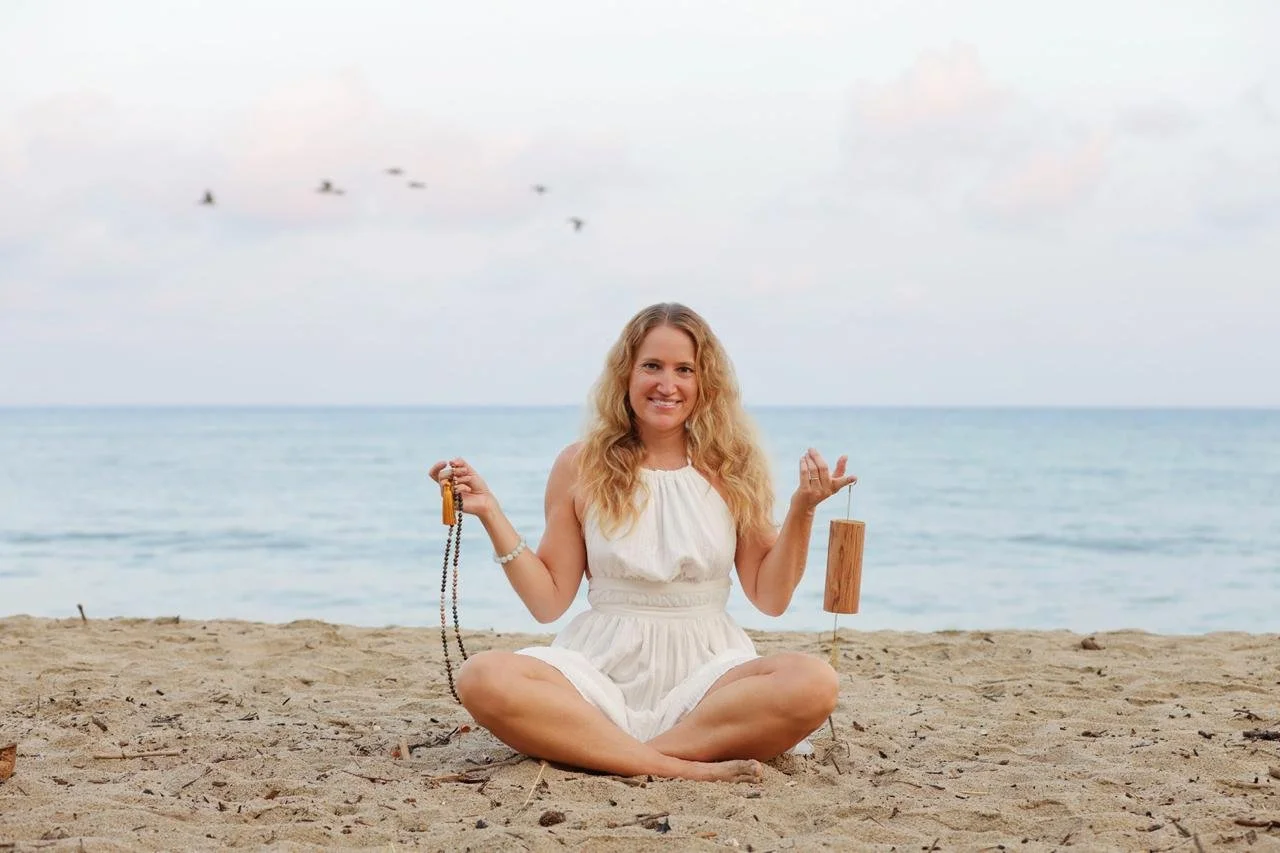
Thanks for visiting my blog on eco-living, eco-Airbnb hosting, wellbeing and travel!
MORE TOPICS:
My ABSOLUTE FAVE yoga mats:
The Manduka Black Mat Pro yoga mat is what I took to my first yoga teacher training, that I still use 15 years later! This is my home-use yoga mat! Honestly, love it!

If you are on-the-go, this lighter version is just as amazing. This is the mat I take to all my yoga classes!
